What is the flow rate of fluid through nickel wire mesh?
As a supplier of Nickel Wire Mesh, I often get asked about the flow rate of fluid through our products. Understanding this is crucial for various industries, from chemical processing to filtration systems and fuel cell technology. In this blog, I'll delve into the factors that influence the fluid flow rate through nickel wire mesh and how our products can meet your specific needs.
Understanding Fluid Flow through Mesh
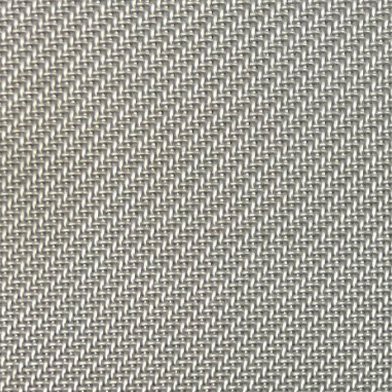
The flow rate of a fluid through nickel wire mesh depends on several key factors. First and foremost is the mesh's pore size. Pore size refers to the openings between the wires in the mesh. A smaller pore size restricts the flow of fluid, as there is less space for the fluid to pass through. Conversely, a larger pore size allows for a higher flow rate. For example, our Plain Weave 40 Mesh Nickel Mesh has a specific pore size that is designed to balance flow rate and filtration efficiency.


Another factor that affects the flow rate is the wire diameter. Thicker wires reduce the open area of the mesh, which in turn decreases the flow rate. Thinner wires, on the other hand, increase the open area and allow for a greater flow of fluid. The mesh pattern also plays a role. Different patterns, such as plain weave, twill weave, or Dutch weave, have different flow characteristics due to the way the wires are interlaced.
The properties of the fluid itself are also important. The viscosity of the fluid, which is a measure of its resistance to flow, can significantly impact the flow rate. A more viscous fluid will flow more slowly through the mesh than a less viscous one. Additionally, the density of the fluid and the pressure applied to it also affect the flow rate. Higher pressures can force the fluid through the mesh more quickly, even if the fluid is viscous.
Flow Rate Calculations
Calculating the flow rate of fluid through nickel wire mesh is not a straightforward process. It typically involves complex mathematical models that take into account all the factors mentioned above. One common approach is to use the Darcy - Forchheimer equation, which is a modification of Darcy's law. This equation considers both viscous and inertial effects on fluid flow through porous media, such as nickel wire mesh.
However, for practical purposes, many industries rely on empirical data and testing. We conduct extensive testing on our nickel wire mesh products to determine their flow characteristics under different conditions. This data allows us to provide our customers with accurate information about the expected flow rate for a given application.
Applications and Flow Rate Requirements
The flow rate requirements vary widely depending on the application. In filtration systems, for example, a balance must be struck between the flow rate and the filtration efficiency. A high flow rate is desirable to ensure that a large volume of fluid can be processed quickly. However, if the flow rate is too high, the filtration may not be effective, as the fluid may pass through the mesh without sufficient contact with the filtration media.
In fuel cell technology, the flow rate of reactant gases through the Fuel Cell Mesh is crucial for optimal performance. The mesh must allow for a consistent and controlled flow of gases to ensure efficient electrochemical reactions. If the flow rate is too low, the fuel cell may not generate enough power. If the flow rate is too high, the gases may not have enough time to react, leading to wasted fuel and reduced efficiency.
Our Nickel Wire Mesh Solutions
At our company, we offer a wide range of nickel wire mesh products to meet the diverse flow rate requirements of different industries. Our meshes are made from high - quality nickel, which provides excellent corrosion resistance and durability. We can customize the pore size, wire diameter, and mesh pattern to achieve the desired flow rate for your specific application.
Whether you need a fine mesh for high - efficiency filtration or a coarser mesh for high - flow applications, we have the expertise and resources to deliver the right product. Our team of engineers and technicians can work with you to understand your needs and recommend the best nickel wire mesh solution.
Contact Us for Your Nickel Wire Mesh Needs
If you're in the market for nickel wire mesh and need to understand the flow rate requirements for your application, we're here to help. Our experienced sales team can provide you with detailed information about our products and their flow characteristics. We can also assist you in selecting the right mesh for your specific needs and answer any questions you may have.
Don't hesitate to reach out to us to discuss your requirements. We look forward to the opportunity to work with you and provide you with the high - quality nickel wire mesh products you need.
References
- Bear, J. (1972). Dynamics of Fluids in Porous Media. American Elsevier Publishing Company.
- Dullien, F. A. L. (1992). Porous Media: Fluid Transport and Pore Structure. Academic Press.
- Incropera, F. P., & DeWitt, D. P. (2002). Introduction to Heat Transfer. Wiley.