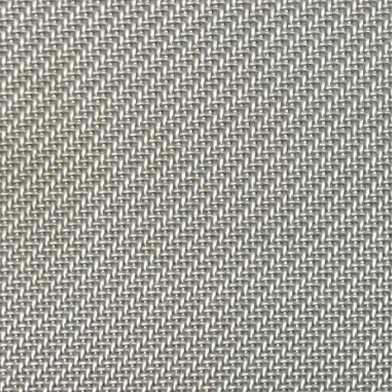
As a trusted supplier of flat wire mesh belts, I understand the critical importance of ensuring the quality and performance of our products. Testing methods play a pivotal role in guaranteeing that our flat wire mesh belts meet the highest standards and can withstand the rigors of various industrial applications. In this blog, I will delve into the different testing methods we use to assess the quality of flat wire mesh belts.
Tensile Strength Testing
Tensile strength is one of the most fundamental properties of a flat wire mesh belt. It measures the maximum amount of tensile stress that a material can withstand before breaking. To conduct a tensile strength test on a flat wire mesh belt, we use a universal testing machine. A sample of the mesh belt is clamped at both ends of the machine, and then a gradually increasing force is applied until the sample breaks.
During the test, we record the force applied and the corresponding elongation of the sample. The tensile strength is calculated by dividing the maximum force by the original cross - sectional area of the sample. This test helps us determine if the mesh belt can handle the pulling forces it will encounter in its intended application, such as in a conveyor system where it needs to move heavy loads.
Elongation Testing
Elongation testing is closely related to tensile strength testing. It measures the percentage increase in the length of a flat wire mesh belt sample when it is subjected to a tensile force up to its breaking point. Elongation is an important property as it indicates the ductility of the mesh belt. A mesh belt with good elongation properties can better absorb shocks and vibrations without breaking.
To perform an elongation test, we mark two points on the sample before the tensile test. After the sample breaks, we measure the distance between the two points again. The elongation percentage is then calculated using the formula: Elongation (%) = [(Final length - Original length)/Original length] × 100. By knowing the elongation of our flat wire mesh belts, we can ensure that they can adapt to different working conditions without premature failure.
Hardness Testing
Hardness testing is used to evaluate the resistance of the flat wire mesh belt material to indentation, scratching, or wear. There are several methods for hardness testing, but the most commonly used ones in our industry are the Rockwell hardness test and the Brinell hardness test.
In the Rockwell hardness test, a small indenter is pressed into the surface of the mesh belt under a specific load. The depth of the indentation is then measured, and the hardness value is read from a scale. The Brinell hardness test, on the other hand, uses a larger indenter and a higher load. A spherical indenter is pressed into the material, and the diameter of the indentation is measured. The Brinell hardness number is calculated based on the load and the surface area of the indentation.
Hardness testing helps us ensure that the flat wire mesh belt has the right level of hardness for its application. For example, in applications where the belt will come into contact with abrasive materials, a harder mesh belt will be more resistant to wear and have a longer service life.
Weld Strength Testing
Since flat wire mesh belts often involve welding processes to join the wires together, weld strength testing is crucial. A weak weld can lead to the failure of the entire mesh belt. We use several methods to test the weld strength.


One common method is the shear test. In this test, a force is applied parallel to the weld joint to try to shear it apart. The maximum force that the weld can withstand before failure is recorded as the shear strength. Another method is the peel test, which is used to test the strength of the bond between the welded wires. A force is applied to peel the wires apart at the weld joint.
By conducting weld strength tests, we can ensure that the joints in our flat wire mesh belts are strong enough to hold up under the stresses of normal use. This is especially important in high - speed or high - load applications where the integrity of the welds is essential for the safe and efficient operation of the belt.
Corrosion Resistance Testing
Many flat wire mesh belts are used in environments where they are exposed to corrosive substances such as chemicals, moisture, or saltwater. Therefore, corrosion resistance testing is necessary to ensure the durability of the belts.
One of the most common corrosion resistance tests is the salt spray test. In this test, the mesh belt sample is placed in a chamber where a fine mist of saltwater is sprayed onto it. The sample is left in the chamber for a specified period, usually several hours or days. After the test, the sample is examined for signs of corrosion, such as rust or pitting.
We can also use electrochemical tests to measure the corrosion rate of the mesh belt material. These tests involve applying an electrical current to the sample and measuring the rate of corrosion based on the current flow. By conducting corrosion resistance tests, we can select the appropriate materials and surface treatments for our flat wire mesh belts to ensure they can withstand the harsh environments in which they will be used.
Surface Finish Testing
The surface finish of a flat wire mesh belt can affect its performance in several ways. A smooth surface finish can reduce friction, which is beneficial in conveyor applications as it can improve the efficiency of the system. It can also prevent the accumulation of dirt and debris on the belt.
To test the surface finish, we use profilometers. A profilometer measures the roughness of the surface by tracing a stylus across the surface of the mesh belt. The instrument records the height variations of the surface and provides a roughness value. We aim to achieve a consistent and appropriate surface finish for our flat wire mesh belts to meet the requirements of different applications.
Mesh Opening Size Testing
The mesh opening size is an important parameter for flat wire mesh belts, especially in applications such as screening or filtration. Incorrect mesh opening size can lead to poor screening efficiency or the passage of unwanted particles.
We use optical microscopy or digital imaging techniques to measure the mesh opening size. A sample of the mesh belt is placed under the microscope or imaged digitally. Specialized software is then used to measure the dimensions of the mesh openings accurately. By ensuring the correct mesh opening size, we can guarantee that our flat wire mesh belts perform as expected in screening and filtration applications.
As a flat wire mesh belt supplier, we are committed to providing high - quality products. Our comprehensive testing methods allow us to ensure that each flat wire mesh belt leaving our facility meets the strictest quality standards. If you are in need of a reliable flat wire mesh belt for your industrial application, Spiral Mesh Belt, Mesh Metal Belt or Stainless Steel Mesh Belt, we invite you to contact us for a detailed discussion. Our team of experts is ready to assist you in finding the perfect solution for your needs.
References
- ASM Handbook Volume 8: Mechanical Testing and Evaluation. ASM International.
- ASTM Standards for Metallic Materials Testing. ASTM International.